Industry-Leading Software
LVL and Glulam Beam Calculator for Structural Analysis
Engineered wood beams like LVL and Glulam offer high strength, long-span capability, and consistent performance—making them ideal for residential and commercial construction projects. StruCalc’s tools make it easy to evaluate these materials with precision. Whether you’re designing a ridge beam, floor beam, or header, our LVL span calculator and glulam beam span calculator help you size and verify your engineered beams in minutes.
The Importance of Accurate Calculations
Improper sizing of engineered beams can lead to deflection, vibration, or structural failure—especially in long-span applications. StruCalc’s LVL beam calculator and glulam beam calculator allow you to analyze span, bending moment, shear, and deflection according to NDS (National Design Specification) standards. Input your material, spacing, and loads, and get a clean, code-compliant calculation every time.
Building Materials Supported

Wood

Steel

LVL & Glulam

Masonry

Concrete
Get Started with StruCalc’s LVL and Glulam Beam Calculators
For engineers and construction professionals, beam calculation software is an indispensable tool for accurate structural analysis. StruCalc’s beam solver simplifies complex calculations, ensuring safety, compliance, and efficiency. With features like linked load paths, automated member sizing, and detailed calculation reports, StruCalc streamlines beam reaction calculations and beam size optimization. Whether working with wood, steel, or concrete beams, StruCalc enhances productivity and ensures regulatory compliance with the IBC and NDS codes.
Visit StruCalc.com to see beam calculation software helps bring structure and precision to every wall system you design.
LVL and Glulam Beam Calculator FAQs
What Are LVL and Glulam Beams?
LVL (Laminated Veneer Lumber) – A high-strength engineered wood product made from thin wood veneers, ideal for headers, ridge beams, and long-span joists.
- Glulam (Glued Laminated Timber) – Built from stacked dimensional lumber bonded with adhesives, commonly used for floor beams, roof beams, and structural arches.
Both offer superior strength and reliability compared to solid sawn lumber.
The tool automatically applies applicable load combinations per IBC and ASCE 7. LVL (Laminated Veneer Lumber) – A high-strength engineered wood product made from thin wood veneers, ideal for headers, ridge beams, and long-span joists.
What Can You Calculate with StruCalc’s LVL and Glulam Tools?
Using the LVL beam calculator and glulam beam calculator, engineers can evaluate:
- Bending Capacity – Calculate the moment demand and compare to allowable stresses.
- Shear Strength – Verify beam performance under vertical shear.
- Deflection – Ensure limits (L/240 or L/360) are met for code compliance.
- Span Limits – Use the glulam beam span calculator or LVL span calculator to determine maximum unsupported lengths.
- Load Combinations – Automatically apply ASD combinations from IBC and NDS.
All results are tied to input loads (dead, live, snow) and support conditions. Using the LVL beam calculator and glulam beam calculator, engineers can evaluate:
Why Proper Bearing Matters for LVL Beams
Proper support at the ends and any intermediate points is essential for LVL beams to perform as designed. Without sufficient bearing, the high loads these engineered wood members carry can’t be safely transferred into the supporting structure. This can lead to issues like crushing of wood fibers, excessive sagging, or even structural failure at critical locations.
By ensuring generous bearing length—following APA–The Engineered Wood Association guidelines or manufacturer-specific recommendations—you help distribute the load evenly and protect against localized stresses. This is especially important for long spans or high-load areas, where bearing shortfalls are a common cause of premature beam distress.
Ultimately, investing attention in proper bearing isn’t just following best practice—it’s a code compliance and peace-of-mind measure for every project.Wall stud sizing and spacing are crucial to meeting code and performance goals. StruCalc’s stud wall framing software provides:
What Applications Are Supported?
StruCalc’s engineered wood tools are ideal for:
- Residential – Floor beams, ridge beams, headers, deck beams.
- Commercial – Long-span roof beams, multi-member floor systems.
- Mixed Construction – LVL used in hybrid steel/wood systems.
Each beam is analyzed using straight, simply supported or multi-span geometry (curved Glulam not supported). A shearwall provides lateral resistance against wind and seismic loads. StruCalc’s shearwall calculator supports:
Why Is a Proper Nailing Pattern Critical for Multi-Ply LVL Beams?
When combining multiple plies of LVL to form a single built-up beam, the connection between plies is as important as the strength of the wood itself. A precise nailing pattern ensures:
- Load Sharing: Nails or bolts allow the individual LVL plies to act together and share loads evenly, maximizing the structural strength.
- Prevention of Separation: Correct nailing keeps the plies from separating or slipping under changing loads, maintaining the integrity of the beam throughout its lifespan.
- Code Compliance: Building codes and manufacturers (like Boise Cascade, Weyerhaeuser, and LP) specify nailing schedules to guarantee your beam meets design requirements and passes inspections.
- Long-Term Performance: Proper fastening safeguards against issues such as differential movement or uneven deflection, ensuring your engineered beam remains reliable even under high-load conditions.
Carefully following recommended nailing patterns—whether specified by APA, IBC, or product literature—ensures your multi-ply LVL beam achieves its designed performance for both safety and longevity.Yes. StruCalc supports:
What Installation Tips Should Be Followed When Using LVL Beams?
Proper installation is essential for maximizing the performance and longevity of LVL beams. Here are a few best practices to keep in mind:
- Ensure Solid Bearing Support: Always provide firm, level support at all bearing points. This helps transfer loads efficiently and prevents uneven settling.
- Weather Protection: Keep LVL beams dry before and during installation. Store them off the ground and cover with a waterproof tarp or sheeting to limit exposure to moisture—which can affect structural integrity.
- Use Appropriate Hardware: Select joist hangers, connectors, and fasteners that are rated for engineered wood products. Simpson Strong-Tie and USP are common choices for compatible hardware.
- Nailing & Fastening for Multiple Plies: When using multi-ply LVL beams, follow engineered nailing patterns and manufacturer guidelines to ensure the plies act together as a single unit.
- Follow Manufacturer Recommendations: Always check product literature from leading LVL brands like Boise Cascade, LP, or Weyerhaeuser to confirm any special handling or installation requirements unique to your project.
Proper handling and installation help you get the most from your LVL beams while ensuring code compliance and long-term performance.Wall framing involves axial, lateral, and bending loads, which are complex to model in spreadsheets. StruCalc offers:
What Design Standards Does StruCalc Follow?
StruCalc’s beam analysis tools follow:
- NDS (National Design Specification for Wood Construction) – For allowable stress and deflection limits.
- IBC (International Building Code) – For load combinations and serviceability.
- ASCE 7 – For wind, live, snow, and seismic load criteria.
All calculations include clear labeling and permit-ready reports. Wall framing involves axial, lateral, and bending loads, which are complex to model in spreadsheets. StruCalc offers:
Why Use a Glulam or LVL Span Calculator Instead of a Table?
While span tables offer general guidance, they assume uniform conditions. StruCalc provides:
- Custom Load Input – Tailor calculations to your exact project loads.
- Material Flexibility – Evaluate solid wood, LVL, and Glulam side-by-side.
- Linked Load Paths – Carry reactions from joists, walls, and posts.
- Faster Iterations – Change inputs and see results instantly.
This saves time, avoids overdesign, and helps ensure safety. Wall framing involves axial, lateral, and bending loads, which are complex to model in spreadsheets. StruCalc offers:
How to Protect LVL Beams During Construction
Proper handling and protection of LVL beams on-site are essential to maintaining their structural integrity. Always store LVL beams off the ground on level supports and cover them with a waterproof tarp or sheeting to shield them from direct rain and prolonged exposure to moisture. If beams do get wet, allow them to dry completely before installation to prevent potential warping or diminished performance. By keeping your LVL dry and protected, you’ll ensure the material retains its strength and serviceability throughout the build.
What Hardware Is Recommended for Installing LVL Beams?
Proper installation of LVL beams depends on using the right hardware. For most applications, heavy-duty steel joist hangers from trusted brands like Simpson Strong-Tie or USP Structural Connectors are a top choice. These ensure a secure connection at supports. Fasteners matter too—always opt for structural screws or nails rated for engineered wood, meeting manufacturer recommendations for diameter, length, and corrosion resistance.
When installing LVL beams:
- Use code-compliant hangers engineered for LVL or similar engineered lumber.
- Select bolts, lag screws, or specialty fasteners (such as Strong-Drive SDS screws) for beam-to-column or multi-member connections.
- Galvanized or stainless-steel hardware is a must for outdoor or treated lumber situations to prevent corrosion.
- Confirm that all installation meets IBC and NDS requirements, including minimum edge distances and fastening schedules.
For the best performance, always refer to the beam manufacturer and hardware guidelines, and double-check local code requirements.
Design Faster & Reduce Rework With Powerful New Features
Let StruCalc save you time and help you do more of what you do best.
Intuitive, 3D Interface W/ Automated Member Sizing
- Drag and Drop Feature Design
- Intuitive Parameter Adjustment
- Automated Connector Selection & Member Sizing
- Visually accurate structures
Multi-level, Triaxial Load Linking With 3D Visualizations
- Visually link roof beams to shearwalls to stud walls to footings in seconds.
- Visualize connections between members to ensure loads are properly applied.
Automated Calculation & Application of ASCE Hazard Loads
- Built-in wind, snow & seismic calculators with ability to automatically apply loads to structures.
Pre-Built, Customizable Design Templates
- Build your own custom templates within each design module.
- Create modular configurations for rafters, decks, floor joists, and more! You can even include wood connectors and fasteners.



Ensure your engineering calculations are future-proof
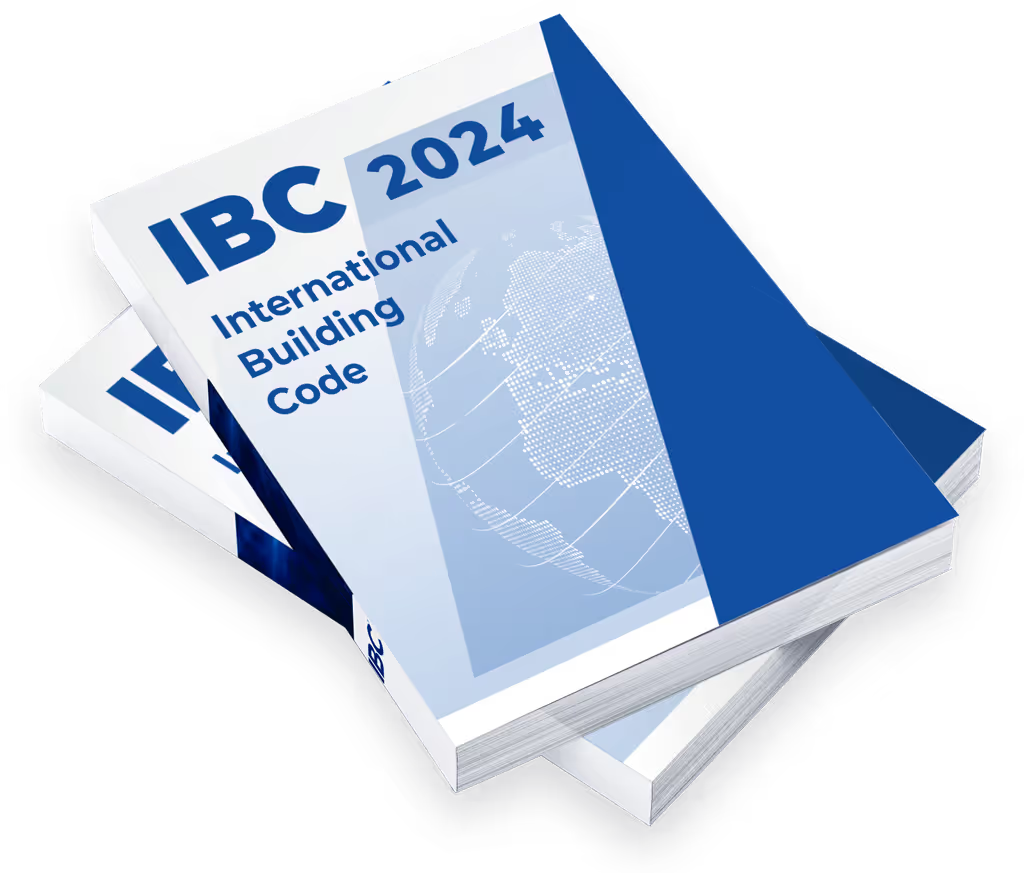
Stay Compliant With The Latest Standards
StruCalc is built to meet the latest engineering and construction standards, ensuring every calculation aligns with current codes and best practices.
- • 2024 IBC
- • ASCE 7-22
- • 2024 NDS (Wood)
- • ACI 318-19 (Concrete)
- • TMS 402/602-16 (Masonry)
- • AISC 360-16 (Steel)

Streamline permit approval
Quick Calculations & Permit Ready Reports
With a customizable report generation tool and easy-to-use calculation modules, StruCalc gets you the answers you need quickly and gives permit reviewers the detail they’re looking for.
Do more in less time
Increase Productivity w/ Templates & Automation
With dozens of built in use cases and the ability to create custom templates for floor joists, roofs, and stud walls, and many other structural members, our intuitive interface and powerful features help you design faster and more accurately. Let StruCalc do the heavy lifting for you!

Tired of Software Bugs and Confusing Inputs?
Get the calculation software you can trust.

Dependable Calculations
For 15 years, our calculation engines have been continuously improved by our structural engineers and proven trustworthy by the thousands of architects and engineers that use them every day.

US Based Engineering Support
We have licensed Professional Engineers and structural design professionals on staff, so when you have a question, just reach out to our US-based engineering team.

Intuitive, Automated Interface
Designed by industry veterans, our 3D visuals, intuitive parameters, and drag and drop feature design enables our users to learn the platform quickly and maximize its functionality.
Pricing & Feature Comparison:
| Top-tier differences: |
StruCalc CORE: $99.97/mo |
Calcs.com: $119/mo |
ENERCALC: $199/mo |
|---|---|---|---|
| Drag & Drop Feature Design | |||
| Multi-Level Load Visualization | |||
| Automated Shearwall Design | |||
| Customizable Design Templates | |||
| Automated Hazard Load Application | |||
| User Themes | |||
| Wood Shearwalls | |||
| Stud Walls | |||
| Bearing Walls | |||
| Retaining Walls | |||
| Hip & Valley Beams | |||
| Collar Ties | |||
| Flitch Beam | |||
| Concrete Beams | |||
| Masonry Beams | |||
| Beam & Joist Spans | |||
| Concrete Columns | |||
| Continuous Footings | |||
| Isolated Footings | |||
| Embedded Posts | |||
| I-Joists | |||
| Glulams | |||
| Solid Sawn | |||
| Steel | |||
| Structural Composite | |||
| 2024 IBC | |||
| 2024 NDS | |||
| 2021 IBC | |||
| 2018 IBC | |||
| 2018 NDS | |||
| 24+ Load Combinations | |||
| Out of Plane Loading | |||
| Multi-span Columns | |||
| Advanced Footing Loads | |||
| Wind, Snow, & Seismic Loads | |||
| Linked Load Tracking | |||
| Beam Analysis | |||
| Wall Analysis | |||
| LRFD | |||
| Live & Dead Loads | |||
| ASD | |||
| Imperial Units | |||
| Masonry Columns | |||
| Concrete Walls | |||
| Masonry Walls | |||
| Wood Hangers | |||
| Curved Glulams |
Packed with Features
Powerful Features & Unbeatable Value
No one else offers as many features as StruCalc. Get more for your money and join thousands of architects and engineers that have chosen StruCalc as their partner for structural calculation software.
Now Offering PDH Courses
Join our community to get great deals on quality PDH courses or get our StruCalc Pro with PDH annual subscription to get 15 PDH hours included with StruCalc Pro.

Purpose-Built Products Tailored To Your Needs
Whether you need simple beam calculations or full vertical and lateral analysis of a custom home, StruCalc has a plan that fits your needs.
StruCalc
Core
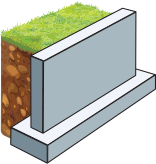
Retaining Walls
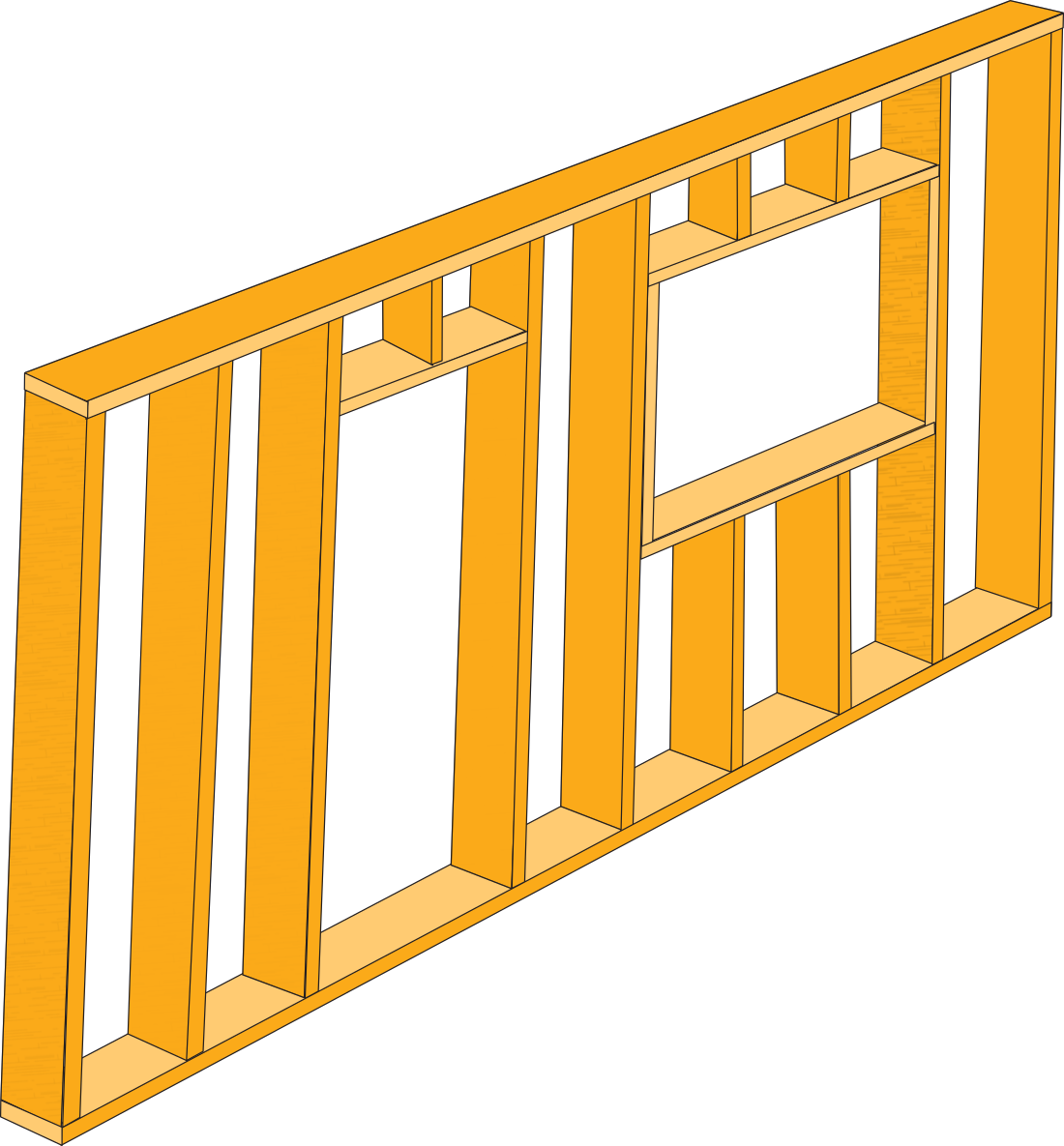
Shearwalls & Stud Walls
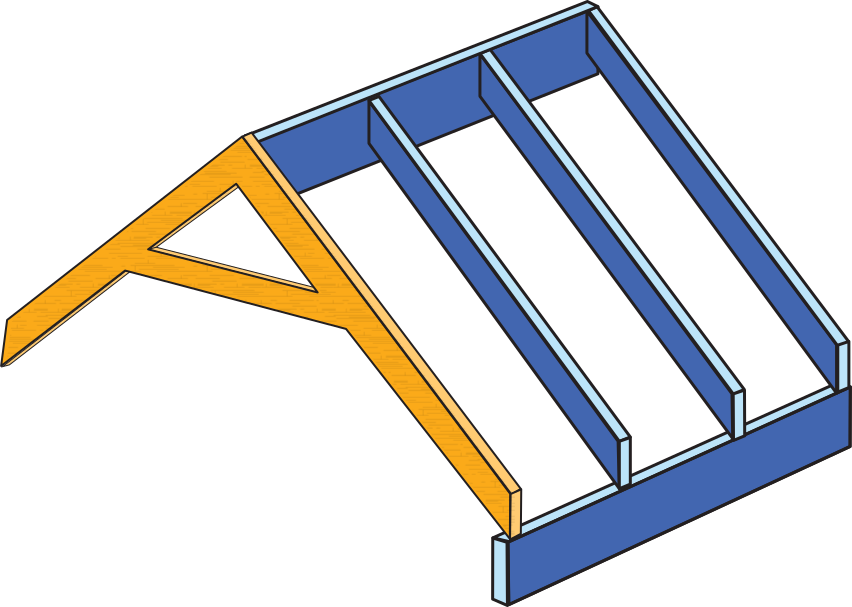
Roof Beams
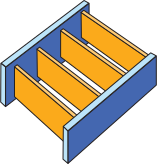
Floor Joists
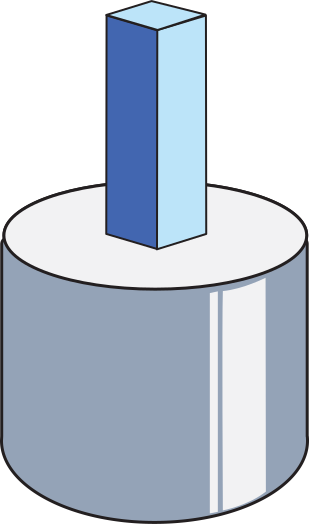
Footings & Much More
StruCalc
Connect
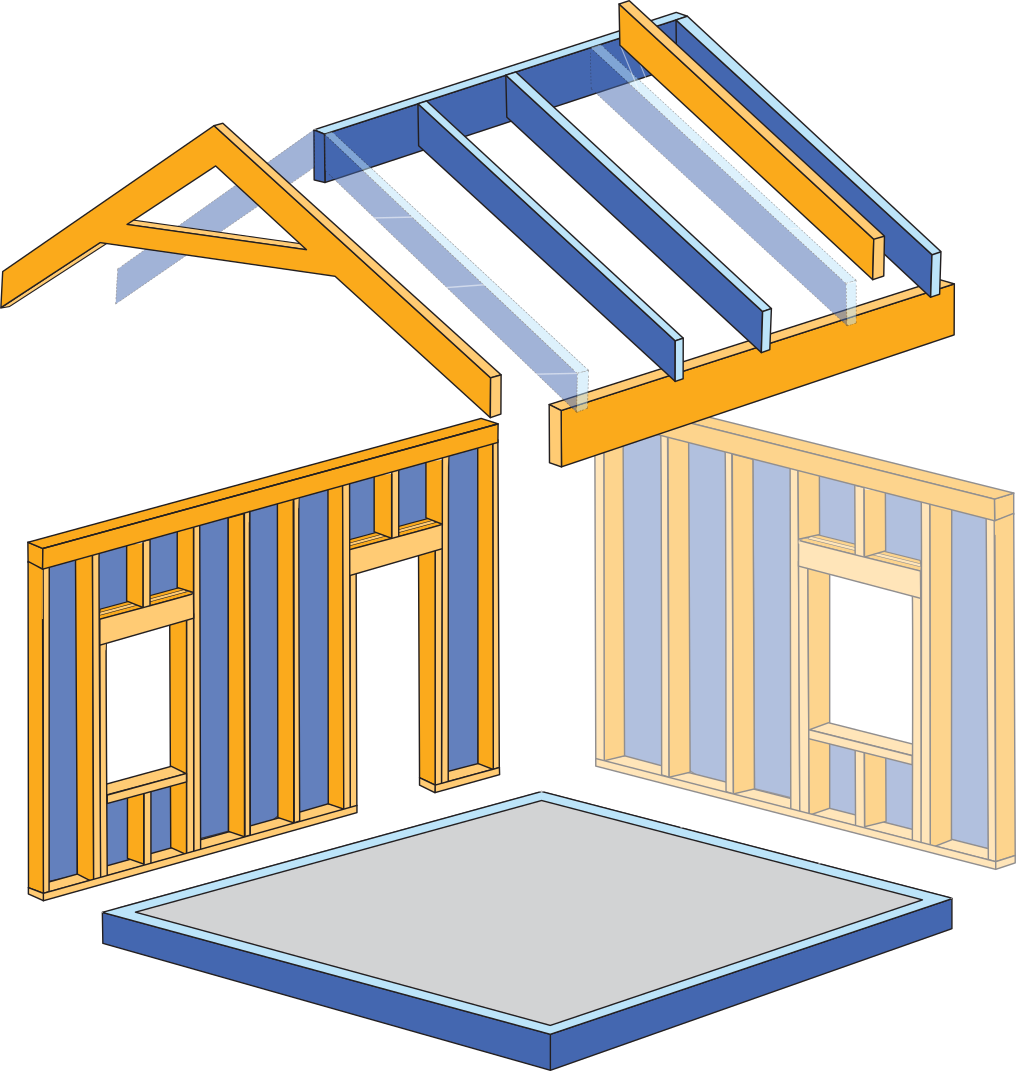
StruCalc
Fusion