Industry-Leading Software
Beam & Column Calculations Made Simple
Structural engineers, architects, and construction professionals rely on accurate calculations to ensure the integrity and safety of their designs. StruCalc offers a comprehensive and user-friendly solution for beam calcs, streamlining the process while maximizing accuracy, efficiency, and compliance with IBC and NDS codes.
The Importance of Accurate Beam Load Calculations
StruCalc’s beam solver provides calculators for various materials, including wood, concrete, LVL & Glulam, masonry, and steel. With features such as linked load paths, automated member sizing, and dynamic load linking, engineers can perform detailed structural analysis quickly, generate comprehensive reports, and simplify the permitting process. This article explores essential aspects of beam load calculations, design challenges, material considerations, and how StruCalc’s beam software optimizes the engineering workflow.
Building Materials Supported

Wood

Steel

LVL & Glulam

Masonry

Concrete
Get Started with StruCalc’s Beam and Column Calculators
For engineers and construction professionals, beam calculation software is an indispensable tool for accurate structural analysis. StruCalc’s beam solver simplifies complex calculations, ensuring safety, compliance, and efficiency. With features like linked load paths, automated member sizing, and detailed calculation reports, StruCalc streamlines beam reaction calculations and beam size optimization. Whether working with wood, steel, or concrete beams, StruCalc enhances productivity and ensures regulatory compliance with the IBC and NDS codes.
Visit StruCalc.com to explore how our integrated beam and column design software help deliver code-compliant results, fast.
Beam and Column Calculator FAQs
What Types of Beam Loads and Beam Analysis Does StruCalc Support?
Beams play a crucial role in structural integrity, distributing loads and ensuring stability. Beam load calculators must account for multiple factors, including:
Deflection Limits – Ensuring beams do not exceed acceptable flexing limits per IBC and NDS standards.
Point Loads and Distributed Loads – Forces applied at single points versus evenly spread loads.
Dead Loads and Live Loads – Permanent structural weight versus variable loads from occupants, furniture, or environmental conditions.
Shear Forces and Bending Moments – Critical factors in beam design to prevent structural failure.
What Structural Building Materials Does StruCalc Support?
Each material has distinct properties affecting beam strength, stiffness, and load capacity:
Masonry & Brick Beams – Often used in load-bearing walls and arched openings, these materials rely on compressive strength and require reinforcement for tensile loads.
Wood Beams – Lightweight and easy to work with, governed by NDS specifications for allowable stress design.
Steel Beams – High strength-to-weight ratio, commonly used in commercial structures.
Concrete Beams – Often reinforced with steel rebar to improve tensile strength.
LVL & Glulam Beams – Engineered wood products offering high strength and customizable dimensions.
How Are Calculations For Beam Loads and Column Loads Different?
Beams and columns serve different structural functions, yet both are fundamental to building integrity. The primary distinctions include:
Beams: Designed to resist bending moments and shear forces while transferring loads horizontally to columns or walls.
Bending Stress
Shear Stress
Deflection Formula for Simply Supported Beams
Columns: Primarily resist axial compression forces and must be analyzed for buckling and slenderness effects.
Euler’s Buckling Load
Axial Stress
Interaction Equations for Combined Bending and Axial Load (Per AISC and NDS)
Columns are susceptible to different failure modes, including short column crushing failure and long column buckling failure, whereas beams are primarily analyzed for bending, shear, and deflection limits.
StruCalc enables engineers to analyze both beams and columns efficiently, offering automated checks for buckling, axial load capacities, and moment resistance to ensure safe and code-compliant designs.Beams and columns serve different structural functions, yet both are fundamental to building integrity. The primary distinctions include:
What Are The Advantages of Software-Based Beam Calculations?
Manual beam calculations require a thorough understanding of structural mechanics, but even experienced engineers encounter difficulties due to the complexity of real-world applications. Some challenges include:
- Complex Load Combinations: Beams often experience multiple concurrent loads, such as dead loads, live loads, wind loads, and seismic forces. Each must be factored correctly, following the load combinations prescribed by the IBC (International Building Code).
- Multi-Span Analysis: Solving for bending moments and shear forces in continuous beams with multiple spans requires iterative methods, such as the Moment Distribution Method, which is tedious to perform by hand.
- Deflection and Vibration Calculations: Hand calculations for deflection involve cumbersome equations, especially for non-standard loading and support conditions. Vibration analysis for dynamic loads, such as foot traffic or machinery-induced vibrations, requires Fourier transforms and advanced dynamic response equations.
- Torsional Stability and Buckling: Lateral-torsional buckling (LTB) is a failure mode that is difficult to analyze manually, as it depends on the beam’s cross-section, lateral bracing conditions, and unbraced length. This typically requires solving differential equilibrium equations or using empirical formulas from the AISC Steel Construction Manual.
- Non-Uniform Cross-Sections: Beams with varying cross-sections or built-up members (e.g., flitched beams) require piecewise integration to determine moment of inertia changes along the length.
While manual calculations can provide approximations for simple structures, they become impractical for complex systems. StruCalc eliminates these challenges by handling triaxial loading, dynamic load linking, and multi-span beams with precision.
While spreadsheets can handle basic beam calcs, they lack:
- Dynamic Load Path Analysis – StruCalc links reactions between members for realistic load distribution.
- Automated Material Selection – Engineers can choose from an extensive material database.
- Built-In Code Compliance – Spreadsheets require manual code checks, increasing the risk of non-compliance.
- Multi-Span Beam Analysis – StruCalc’s multi-span beam solver enables quick analysis of complex spans.
- Cantilever Beam Considerations – Load distribution and deflection analysis are streamlined with cantilever beam calculation tools.
With automated member sizing, StruCalc selects the most efficient beam size based on input loads, saving engineers time while ensuring compliance with safety standards.
Do Beam Calculations Need to Meet IBC and NDS Standards?
Structural calculations must adhere to strict building codes to ensure safety, durability, and regulatory approval. Compliance with IBC (International Building Code) and NDS (National Design Specification for Wood Construction) is essential for engineers and architects designing load-bearing structures. Key considerations for code compliance include:
- Code-Compliant Load Combinations – The IBC specifies required load combinations, accounting for dead loads, live loads, wind, seismic, and snow loads. StruCalc automatically applies these factors based on standard design methodologies.
- Allowable Stress Design (ASD) & Load and Resistance Factor Design (LRFD) – Different design philosophies must be considered. StruCalc allows engineers to switch between ASD and LRFD, ensuring designs meet the latest standards.
- Material-Specific Design Standards – The NDS governs wood construction, while steel and concrete beams must comply with AISC (American Institute of Steel Construction) and ACI (American Concrete Institute) codes. StruCalc incorporates these provisions automatically.
- Deflection and Serviceability Limits – The IBC limits allowable deflections for beams based on span length and material type. StruCalc ensures deflection criteria are met, preventing excessive sagging and vibration.
- Seismic and Wind Load Considerations – Structures in high-seismic or hurricane-prone regions must adhere to stricter guidelines. StruCalc integrates wind and seismic load provisions from ASCE 7 (Minimum Design Loads and Associated Criteria for Buildings and Other Structures) to ensure safety and compliance.
- Permit-Ready Reports – Many jurisdictions require sealed engineering calculations for permit approval. StruCalc generates detailed, structured reports that comply with building department requirements, accelerating the approval process.
By automating these complex compliance requirements, StruCalc eliminates manual errors, reduces design time, and ensures IBC- and NDS-compliant structural solutions.Deck designs require balancing member size, spacing, and cost. Manual tools often lack dynamic linking or code checks. StruCalc offers:
Design Faster & Reduce Rework With Powerful New Features
Let StruCalc save you time and help you do more of what you do best.
Intuitive, 3D Interface W/ Automated Member Sizing
- Drag and Drop Feature Design
- Intuitive Parameter Adjustment
- Automated Connector Selection & Member Sizing
- Visually accurate structures
Multi-level, Triaxial Load Linking With 3D Visualizations
- Visually link roof beams to shearwalls to stud walls to footings in seconds.
- Visualize connections between members to ensure loads are properly applied.
Automated Calculation & Application of ASCE Hazard Loads
- Built-in wind, snow & seismic calculators with ability to automatically apply loads to structures.
Pre-Built, Customizable Design Templates
- Build your own custom templates within each design module.
- Create modular configurations for rafters, decks, floor joists, and more! You can even include wood connectors and fasteners.




Ensure your engineering calculations are future-proof
Stay Compliant With The Latest Standards
StruCalc is built to meet the latest engineering and construction standards, ensuring every calculation aligns with current codes and best practices.
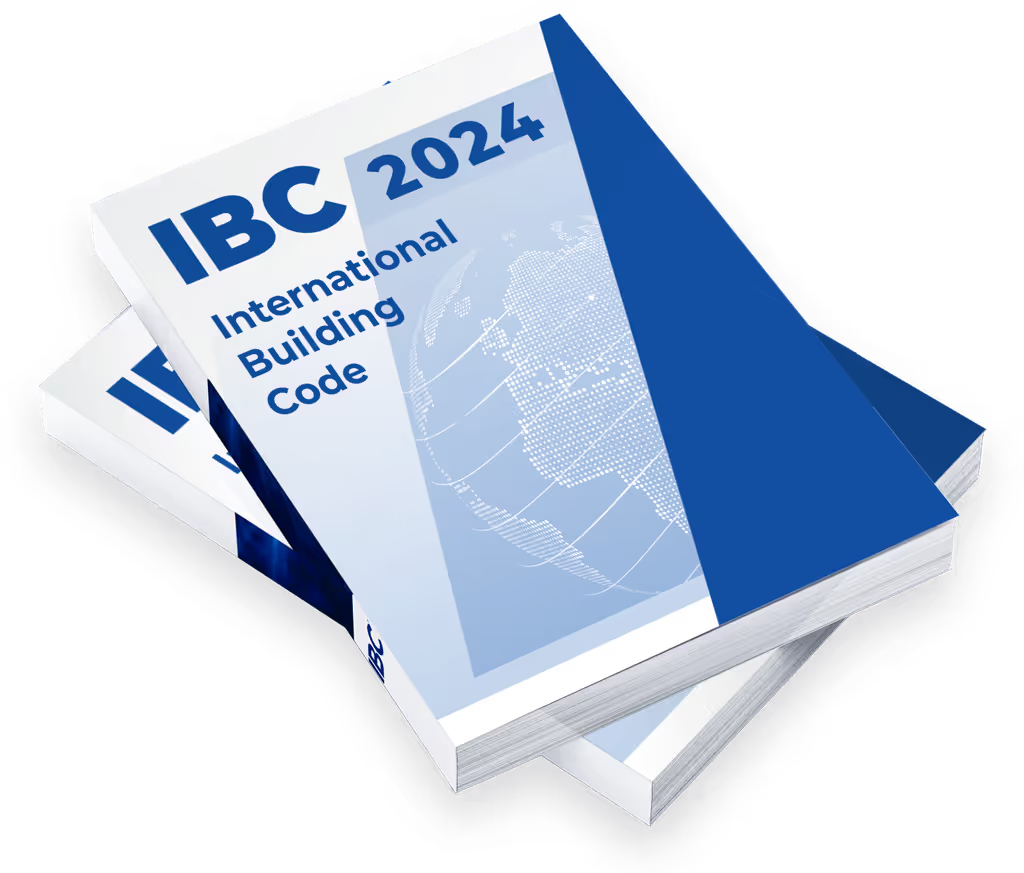
- • 2024 IBC
- • ASCE 7-22
- • 2024 NDS (Wood)
- • ACI 318-19 (Concrete)
- • TMS 402/602-16 (Masonry)
- • AISC 360-16 (Steel)

Streamline permit approval
Quick Calculations & Permit Ready Reports
With a customizable report generation tool and easy-to-use calculation modules, StruCalc gets you the answers you need quickly and gives permit reviewers the detail they’re looking for.
Do more in less time
Increase Productivity w/ Templates & Automation
With dozens of built in use cases and the ability to create custom templates for floor joists, roofs, and stud walls, and many other structural members, our intuitive interface and powerful features help you design faster and more accurately. Let StruCalc do the heavy lifting for you!

Tired of Software Bugs and Confusing Inputs?
Get the calculation software you can trust.

Dependable Calculations
For 15 years, our calculation engines have been continuously improved by our structural engineers and proven trustworthy by the thousands of architects and engineers that use them every day.

US Based Engineering Support
We have licensed Professional Engineers and structural design professionals on staff, so when you have a question, just reach out to our US-based engineering team.

Intuitive, Automated Interface
Designed by industry veterans, our 3D visuals, intuitive parameters, and drag and drop feature design enables our users to learn the platform quickly and maximize its functionality.
Pricing & Feature Comparison:
| Top-tier differences: |
StruCalc CORE: $99.97/mo |
Calcs.com: $119/mo |
ENERCALC: $199/mo |
|---|---|---|---|
| Drag & Drop Feature Design | |||
| Multi-Level Load Visualization | |||
| Automated Shearwall Design | |||
| Customizable Design Templates | |||
| Automated Hazard Load Application | |||
| User Themes | |||
| Wood Shearwalls | |||
| Stud Walls | |||
| Bearing Walls | |||
| Retaining Walls | |||
| Hip & Valley Beams | |||
| Collar Ties | |||
| Flitch Beam | |||
| Concrete Beams | |||
| Masonry Beams | |||
| Beam & Joist Spans | |||
| Concrete Columns | |||
| Continuous Footings | |||
| Isolated Footings | |||
| Embedded Posts | |||
| I-Joists | |||
| Glulams | |||
| Solid Sawn | |||
| Steel | |||
| Structural Composite | |||
| 2024 IBC | |||
| 2024 NDS | |||
| 2021 IBC | |||
| 2018 IBC | |||
| 2018 NDS | |||
| 24+ Load Combinations | |||
| Out of Plane Loading | |||
| Multi-span Columns | |||
| Advanced Footing Loads | |||
| Wind, Snow, & Seismic Loads | |||
| Linked Load Tracking | |||
| Beam Analysis | |||
| Wall Analysis | |||
| LRFD | |||
| Live & Dead Loads | |||
| ASD | |||
| Imperial Units | |||
| Masonry Columns | |||
| Concrete Walls | |||
| Masonry Walls | |||
| Wood Hangers | |||
| Curved Glulams |
Packed with Features
Powerful Features & Unbeatable Value
No one else offers as many features as StruCalc. Get more for your money and join thousands of architects and engineers that have chosen StruCalc as their partner for structural calculation software.
Have You Heard About Our New Pro Rewards Program?
StruCalc now offers a Rewards program that gives Pro users access to exclusive negotiated discounts from stores and services for both business and personal use. From 25% off at Sherwin Williams to 10% off license management services with Harbor Compliance, your savings can easily cover the cost of your StruCalc subscription.

Purpose-Built Products Tailored To Your Needs
Whether you need simple beam calculations or full vertical and lateral analysis of a custom home, StruCalc has a plan that fits your needs.
StruCalc
Core
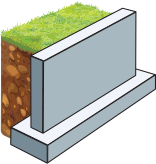
Retaining Walls
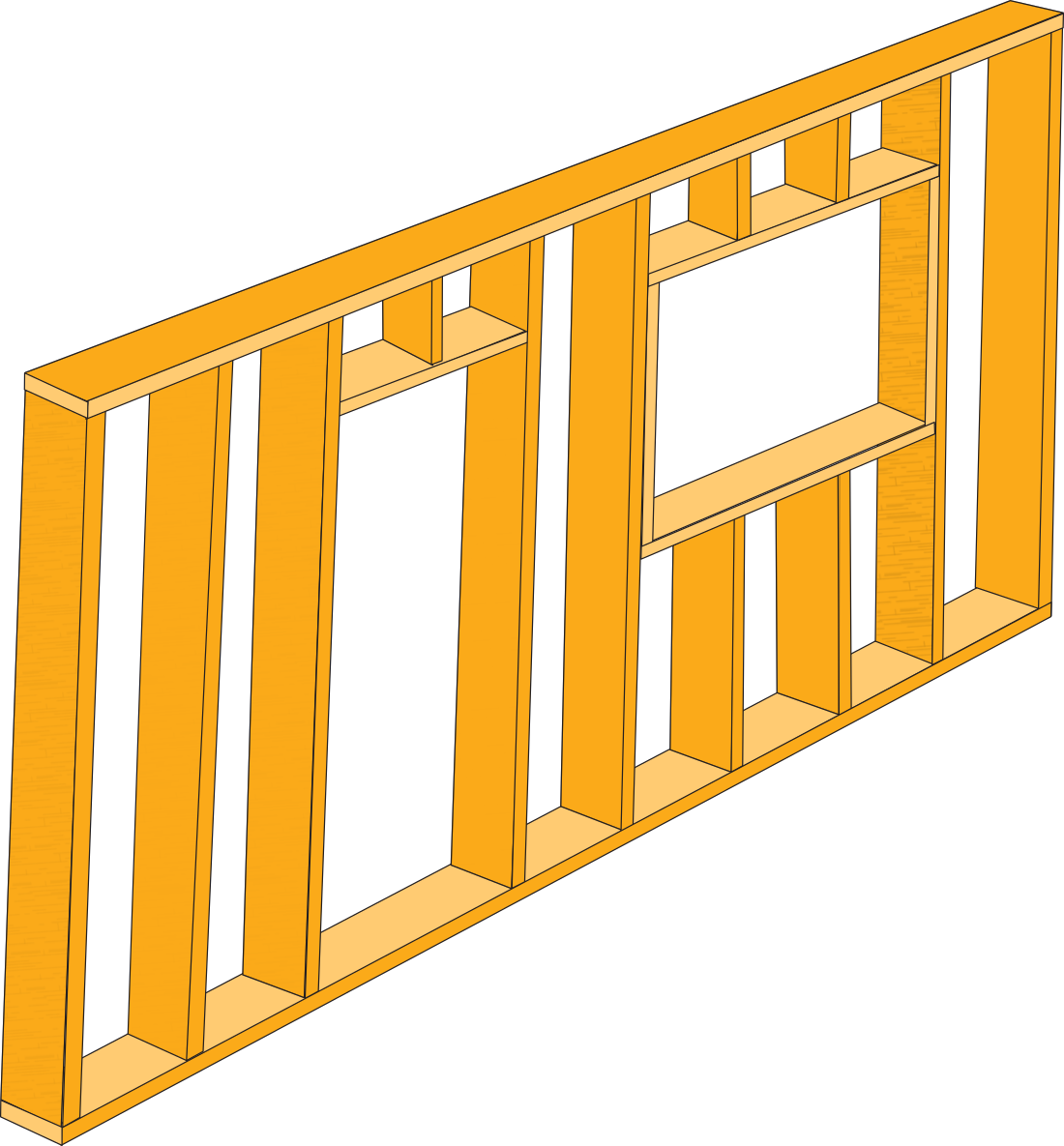
Shearwalls & Stud Walls
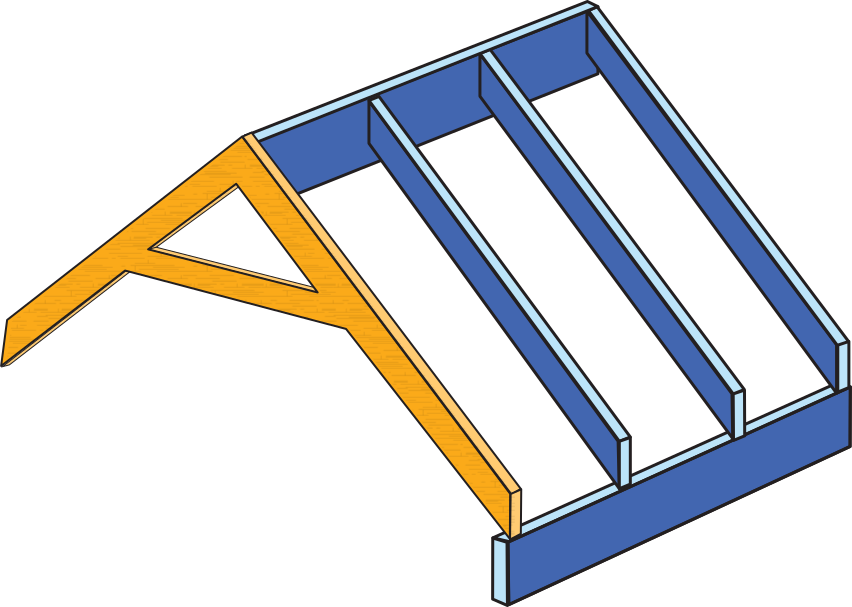
Roof Beams
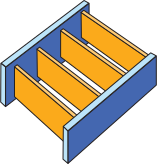
Floor Joists
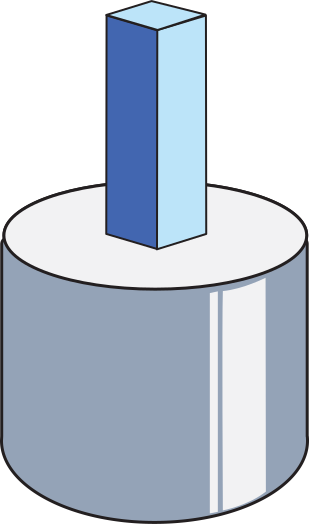
Footings & Much More
StruCalc
Connect
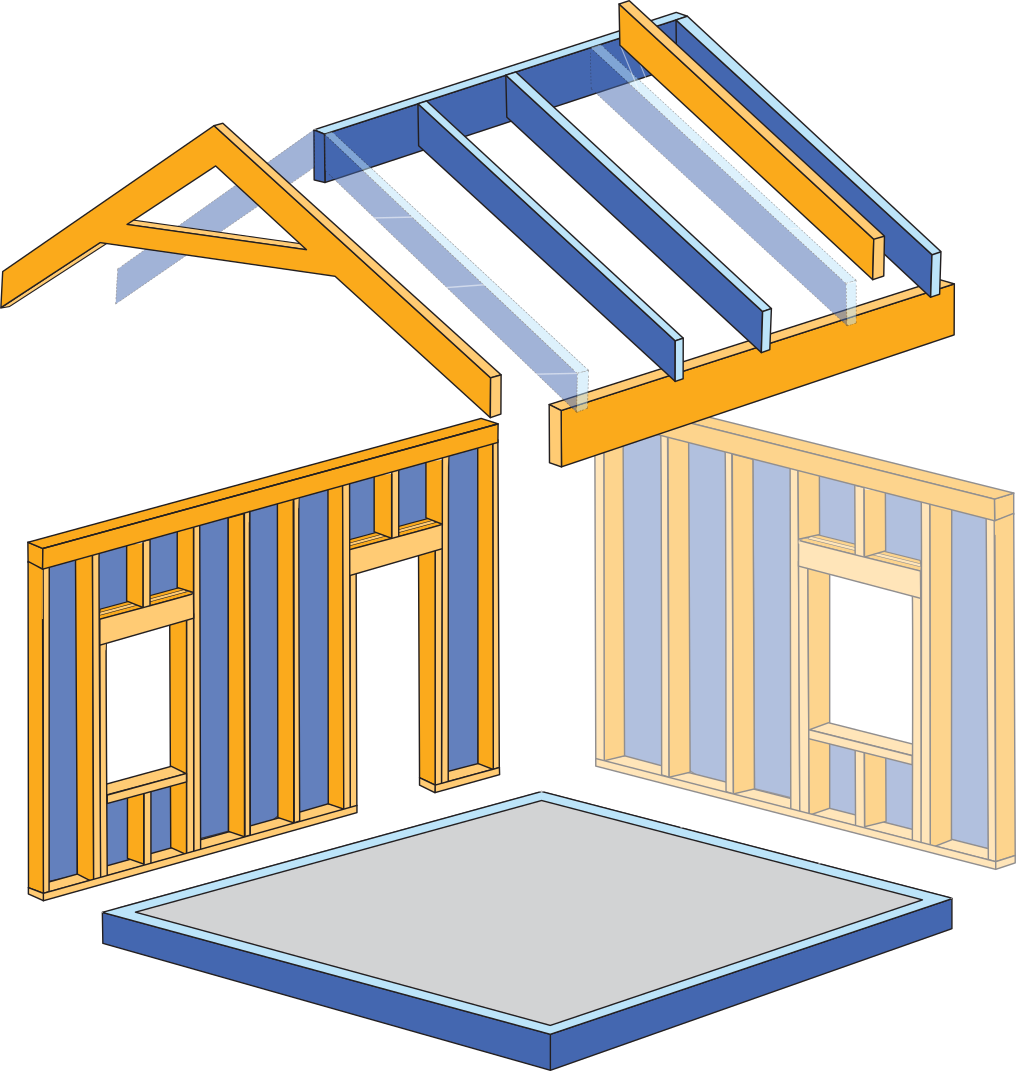
StruCalc
Fusion