Industry-Leading Software
Footing & Embedded Post Calculator
Footings and posts are fundamental components in structural systems, transferring loads from above-ground framing into the ground safely and efficiently. Whether you’re supporting a deck, embedded post, or full foundation system, accurate sizing of footings and post connections is critical to overall structural performance. With support for various loading conditions and soil types, StruCalc provides quick, compliant calculations that streamline the design process and improve project safety.
Applications
StruCalc’s footing calculator modules support the analysis of multiple types of footings and posts and features analysis options for varying soil capacities, post sizes, and loading conditions.

Isolated (Pad) Footings
Analyze square, rectangular, or circular footings supporting columns or posts.

Continuous (Wall) Footings
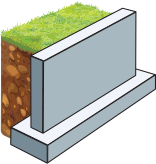
Calculations for continuous footings, which can be used under bearing walls.

Embedded Posts
Analyze depth, embedment, and post-bending strength using the embedded post calculator.
Building Materials Supported

Wood

Steel

LVL & Glulam

Masonry

Concrete
The Importance of Accurate Calculations
Inadequately sized footings can lead to uneven settlement, structural instability, or permit rejection. StruCalc’s tools—including a concrete footing calculator, deck footing calculator, and embedded post calculator—ensure engineers can size isolated, continuous, and embedded elements with precision. With support for various loading conditions and soil types, StruCalc provides quick, compliant calculations that streamline the design process and improve project safety.
Get Started with StruCalc’s Footing and Post Calculators
Whether you’re analyzing an embedded post, sizing a footing for a steel column, or checking frost depth for a deck, StruCalc’s footing calculator suite offers the precision, speed, and confidence engineers need. With built-in tools like the concrete footing calculator, deck footing calculator, and footing design software modules, StruCalc simplifies code compliance and supports structural safety from the ground up.
Visit StruCalc.com to explore how our footing design software supports reliable foundation planning for residential and commercial projects.
Footing and Post Calculator FAQs
What Types of Footings Can StruCalc Analyze?
StruCalc’s footing calculator modules support the analysis of:
- Isolated (Spread/Pad) Footings – Square, rectangular, or circular footings supporting columns or posts.
- Continuous (Wall) Footings – Used under bearing walls or strip foundations.
- Deck Footings – Configurable using the deck footing calculator for load path and bearing area checks.
- Embedded Post Footings – Analyze depth, embedment, and post-bending strength using the embedded post calculator.
Custom options allow for varying soil capacities, post sizes, and loading conditions. StruCalc enables structural load calculations for a variety of wall types:
What Loads and Soil Properties Must Be Considered?
Proper footing and post analysis accounts for:
- Axial Loads – Dead and live loads transmitted from above.
- Lateral Loads – Wind or seismic forces requiring sliding and overturning checks.
- Moment Loads – Especially at embedded posts and eccentrically loaded footings.
- Soil Bearing Capacity – Input allowable bearing pressure based on geotechnical reports.
- Frost Depth and Embedment – Account for local climate and uplift resistance.
When designing footings and posts, it’s essential to evaluate all relevant load data, including dead load, live load, and snow load (all typically measured in pounds per square foot). These loads, along with the soil’s bearing capacity, form the backbone of accurate foundation sizing and safety checks. For deck and post-frame applications, understanding how these loads interact with soil conditions ensures the structural support is both compliant and tailored to site-specific requirements.
If you’re uncertain about load values or soil properties, consulting a structural engineer or referring to geotechnical reports is always recommended. For those seeking to understand the underlying calculations or prefer to manually size footings by post, utilizing detailed load calculation guides can be helpful, especially when accounting for regional snow loads or unique framing conditions.
StruCalc’s calculators incorporate these values to ensure safe and efficient foundation design.Wall elements are exposed to diverse loading conditions:
How Does StruCalc Assist with Concrete and Deck Footings?
Using the concrete footing calculator or deck footing calculator, engineers can:
- Evaluate soil pressure under different footing shapes and sizes.
- Automatically apply load combinations per IBC and ASCE 7.
- Determine required footing dimensions for axial and moment loads.
- Check uplift and overturning resistance for freestanding and attached decks.
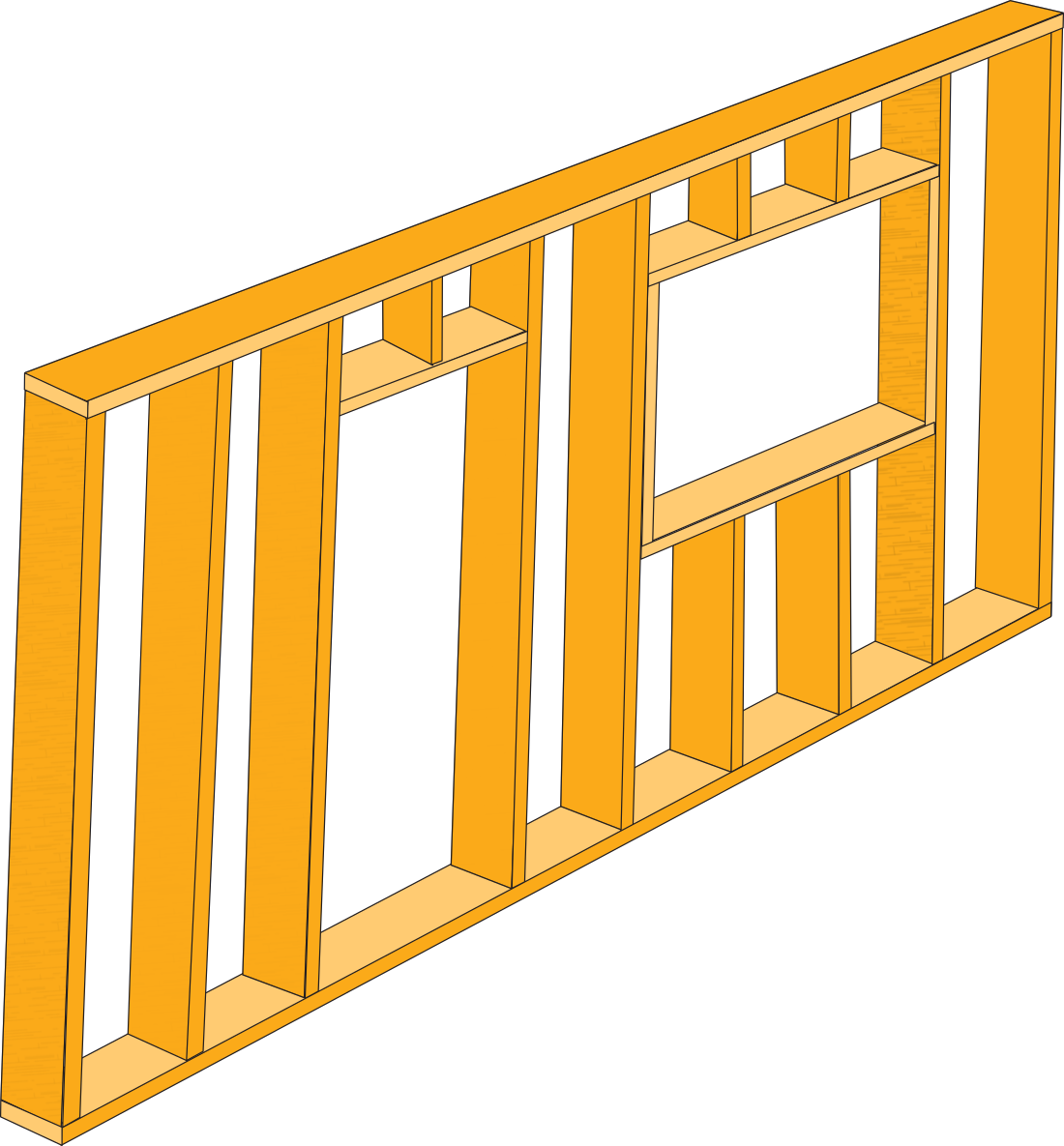
Calculations follow standard design methods for both residential and light commercial applications. Wall stud sizing and spacing are crucial to meeting code and performance goals. StruCalc’s stud wall framing software provides:
What is Included in the Embedded Post Calculator?
Embedded posts are common in fences, decks, and post-frame buildings. StruCalc’s embedded post calculator includes:
- Analysis of bending strength, embedment depth, and soil resistance.
- Checks for rotation, pull-out, and bearing failure.
- Options for wood, steel, or composite posts.
- Support for load combinations and unbraced length.
This makes it easy to verify post safety under multiple real-world conditions. A shearwall provides lateral resistance against wind and seismic loads. StruCalc’s shearwall calculator supports:
What Codes and Standards Does StruCalc Support?
StruCalc’s footing and post modules follow:
- IBC (International Building Code) – Governs load combinations, frost depth, and minimum bearing.
- ACI 318 – Concrete design specifications for isolated and wall footings.
- NDS – Wood post design including axial and bending interaction.
- ASCE 7 – Prescribes dead, live, wind, and seismic loads.
All calculations can be reviewed, printed, and submitted with permit drawings. Yes. StruCalc supports:
Why Use StruCalc Instead of a Manual or Spreadsheet-Based Footing Calculator?
Spreadsheets are limited when it comes to handling real-time loading conditions, post-bending interactions, and linked reactions from framing systems. StruCalc offers:
- Integrated Load Path Tracking – From roof to soil.
- Automatic Footing Sizing – Based on loads and allowable soil pressure.
- Custom Post Embedment Analysis – With rotation and uplift checks.
Permit-Ready Outputs – Clear documentation for building officials. Wall framing involves axial, lateral, and bending loads, which are complex to model in spreadsheets. StruCalc offers:
What Should I Do If I’m Uncertain About Input Data or Deck Design?
If you’re ever unsure about which values to enter—whether it’s soil bearing capacity, load estimates, or any other design input—it’s best to reach out to a licensed structural engineer or design professional. They can help interpret geotechnical reports, local building code requirements, and site-specific conditions to ensure every assumption is accurate.
Engineers are equipped to handle tricky situations, unusual geometries, or when your project’s outside standard prescriptive tables. When in doubt, professional guidance not only safeguards your design but also streamlines the approval process, ensuring your footing and deck calculations hold up under review.Wall framing involves axial, lateral, and bending loads, which are complex to model in spreadsheets. StruCalc offers:
What are the differences in footing size requirements for decks versus post-frame buildings?
When determining the appropriate footing size, it’s important to recognize the differences in load paths and functional demands between decks and post-frame (pole barn) structures.
Deck Footings:
Decks typically support lighter, uniformly distributed loads. Footings are most often sized for the weight of the deck framing, live loads from occupants, and occasionally light furniture. For standard square or rectangular decks without heavy additions—like hot tubs or outdoor kitchens—footing sizes can usually be smaller. However, any unusual shapes, additional stories, or concentrated loads call for more robust footings, and may warrant review by a structural engineer.
Post-Frame Building Footings:
Post-frame structures, such as pole barns, carry higher axial and sometimes lateral loads through fewer columns. Because each post must transfer a greater portion of the overall building load—including roof, walls, wind, and, in many cases, snow and equipment—footings generally require a larger diameter and/or greater depth. The requirements are shaped by building size, spacing between posts, and local soil conditions.
In summary:
- Deck footings are generally smaller and spaced closer together, designed for moderate, distributed loads.
- Post-frame building footings tend to be bigger and deeper to handle higher, concentrated loads at wider intervals.
In both cases, soil type, frost depth, and local code requirements play a critical role in final footing selection. Collaborating with a professional or utilizing robust structural calculators can help ensure that your design remains safe, efficient, and code compliant.Wall framing involves axial, lateral, and bending loads, which are complex to model in spreadsheets. StruCalc offers:
How Can I Reduce Footing Size If My Design Calls for More Than 24 Inches?
If your calculations indicate a required footing diameter greater than 24 inches, there are practical adjustments you can make to bring the size down while maintaining safe load transfer.
Consider the following strategies:
- Increase the Number of Posts: By adding more posts, you distribute the load across additional footings, reducing the demand on each individual footing.
- Reduce Post or Beam Spacing: Decreasing the distance between posts or beams spreads loads more evenly and lowers the force on each footing.
- Modify Deck or Building Width: Narrowing the span between supporting elements can decrease the required footing size, since less tributary area is transferred to each support.
- Optimize Structural Layouts: Strategic reconfiguration—such as redistributing posts or adjusting beam layouts—often leads to more balanced load paths, which helps avoid oversized footings.
Before making changes, always ensure modifications remain consistent with local building codes (IBC, ACI 318, NDS) and coordinate with a licensed engineer or authority as required. This approach not only helps right-size your footings, but also streamlines materials and labor costs.
How Do Heavy Items Like Hot Tubs or Outdoor Kitchens Impact Footing Sizing?
Adding significant weight to your deck—such as a hot tub, outdoor kitchen, paver overlays, or large planters—directly increases the loads that your footings and posts must support. These concentrated or distributed loads require larger or specially reinforced footings to ensure adequate bearing capacity and to prevent differential settlement, uplift, or structural failure.
When designing for heavy features:
- Calculate the weight of each additional item (e.g., filled hot tub from manufacturer’s specs, kitchen equipment, masonry).
- Add these to your total dead and live load for the footing design, not just to surrounding framing.
- Ensure moment, shear, and bearing checks are recalculated for any post or footing supporting these loads.
- For unusually shaped decks or complex load paths, a more detailed analysis using load distribution principles or consultation with a structural engineer is recommended.
In short, heavier features mean larger footings and more robust connection details—be sure to include these loads up front as you size each element for both code compliance and long-term durability.
Where to Find Manual Calculation Guides for Footing Size
If you’re looking to dig deeper into hand calculations or need to reference classic formulas for deck and post-frame footing design, several industry-standard resources are available:
- Deck Footings: The Prescriptive Residential Wood Deck Construction Guide (DCA 6) published by the American Wood Council offers formulas and tables widely accepted by building departments. It covers footing sizes, tributary areas, and even how to factor in snow loads.
- Post-Frame Buildings: The National Frame Building Association (NFBA) provides comprehensive guidelines for footing and column analysis specific to post-frame construction. Their manuals include step-by-step calculations and load path considerations.
- General Formulas: Textbooks such as Design of Wood Structures by Breyer et al. And resources from the American Society of Civil Engineers (ASCE) deliver foundational formulas and sample problems for a range of soil and load conditions.
These guides are especially useful if you want to verify a design, understand load distribution first-hand, or simply prefer the confidence that comes with manual checks alongside your software output. With these resources, you’ll be equipped to handle footing design for decks, free-standing posts, and post-frame structures with professional rigor.Wall framing involves axial, lateral, and bending loads, which are complex to model in spreadsheets. StruCalc offers:
Design Faster & Reduce Rework With Powerful New Features
Let StruCalc save you time and help you do more of what you do best.
Intuitive, 3D Interface W/ Automated Member Sizing
- Drag and Drop Feature Design
- Intuitive Parameter Adjustment
- Automated Connector Selection & Member Sizing
- Visually accurate structures
Multi-level, Triaxial Load Linking With 3D Visualizations
- Visually link roof beams to shearwalls to stud walls to footings in seconds.
- Visualize connections between members to ensure loads are properly applied.
Automated Calculation & Application of ASCE Hazard Loads
- Built-in wind, snow & seismic calculators with ability to automatically apply loads to structures.
Pre-Built, Customizable Design Templates
- Build your own custom templates within each design module.
- Create modular configurations for rafters, decks, floor joists, and more! You can even include wood connectors and fasteners.




Ensure your engineering calculations are future-proof
Stay Compliant With The Latest Standards
StruCalc is built to meet the latest engineering and construction standards, ensuring every calculation aligns with current codes and best practices.
- • 2024 IBC
- • ASCE 7-22
- • 2024 NDS (Wood)
- • ACI 318-19 (Concrete)
- • TMS 402/602-16 (Masonry)
- • AISC 360-16 (Steel)

Streamline permit approval
Quick Calculations & Permit Ready Reports
With a customizable report generation tool and easy-to-use calculation modules, StruCalc gets you the answers you need quickly and gives permit reviewers the detail they’re looking for.
Do more in less time
Increase Productivity w/ Templates & Automation
With dozens of built in use cases and the ability to create custom templates for floor joists, roofs, and stud walls, and many other structural members, our intuitive interface and powerful features help you design faster and more accurately. Let StruCalc do the heavy lifting for you!

Tired of Software Bugs and Confusing Inputs?
Get the calculation software you can trust.

Dependable Calculations
For 15 years, our calculation engines have been continuously improved by our structural engineers and proven trustworthy by the thousands of architects and engineers that use them every day.

US Based Engineering Support
We have licensed Professional Engineers and structural design professionals on staff, so when you have a question, just reach out to our US-based engineering team.

Intuitive, Automated Interface
Designed by industry veterans, our 3D visuals, intuitive parameters, and drag and drop feature design enables our users to learn the platform quickly and maximize its functionality.
Pricing & Feature Comparison:
| Top-tier differences: |
StruCalc CORE: $99.97/mo |
Calcs.com: $119/mo |
ENERCALC: $199/mo |
|---|---|---|---|
| Drag & Drop Feature Design | |||
| Multi-Level Load Visualization | |||
| Automated Shearwall Design | |||
| Customizable Design Templates | |||
| Automated Hazard Load Application | |||
| User Themes | |||
| Wood Shearwalls | |||
| Stud Walls | |||
| Bearing Walls | |||
| Retaining Walls | |||
| Hip & Valley Beams | |||
| Collar Ties | |||
| Flitch Beam | |||
| Concrete Beams | |||
| Masonry Beams | |||
| Beam & Joist Spans | |||
| Concrete Columns | |||
| Continuous Footings | |||
| Isolated Footings | |||
| Embedded Posts | |||
| I-Joists | |||
| Glulams | |||
| Solid Sawn | |||
| Steel | |||
| Structural Composite | |||
| 2024 IBC | |||
| 2024 NDS | |||
| 2021 IBC | |||
| 2018 IBC | |||
| 2018 NDS | |||
| 24+ Load Combinations | |||
| Out of Plane Loading | |||
| Multi-span Columns | |||
| Advanced Footing Loads | |||
| Wind, Snow, & Seismic Loads | |||
| Linked Load Tracking | |||
| Beam Analysis | |||
| Wall Analysis | |||
| LRFD | |||
| Live & Dead Loads | |||
| ASD | |||
| Imperial Units | |||
| Masonry Columns | |||
| Concrete Walls | |||
| Masonry Walls | |||
| Wood Hangers | |||
| Curved Glulams |
Packed with Features
Powerful Features & Unbeatable Value
No one else offers as many features as StruCalc. Get more for your money and join thousands of architects and engineers that have chosen StruCalc as their partner for structural calculation software.
Have You Heard About Our New Pro Rewards Program?
StruCalc now offers a Rewards program that gives Pro users access to exclusive negotiated discounts from stores and services for both business and personal use. From 25% off at Sherwin Williams to 10% off license management services with Harbor Compliance, your savings can easily cover the cost of your StruCalc subscription.

Purpose-Built Products Tailored To Your Needs
Whether you need simple beam calculations or full vertical and lateral analysis of a custom home, StruCalc has a plan that fits your needs.
StruCalc
Core
Retaining Walls
Shearwalls & Stud Walls
Roof Beams
Floor Joists
Footings & Much More
StruCalc
Connect
StruCalc
Fusion