Industry-Leading Software
Stud Wall Calculator
Stud walls are among the most common structural elements in residential and light commercial construction, providing critical support for roofs, floors, and other building components. From selecting the appropriate stud size and spacing to verifying code compliance and structural capacity, engineers and designers must ensure that every wall system performs as intended. Whether you’re using a stud wall calculator to analyze load-bearing walls, optimize framing layouts, or generate permit-ready reports, accurate calculations are essential for safe and efficient design.
How To Design a Stud Wall with StruCalc
Building Materials Supported

Wood

Steel

LVL & Glulam

Masonry

Concrete
Get Started with StruCalc’s Stud Wall Calculator
Whether you’re analyzing load-bearing stud walls, optimizing stud spacing, or evaluating multiple framing configurations, StruCalc provides structural calculations that help simplify the wall design process. With intuitive inputs, automated calculations, and detailed permit-ready reports, StruCalc gives engineers, architects, and designers the tools they need to design with confidence.
Visit StruCalc.com to see how our stud wall calculator helps improve productivity, maintain code compliance, and bring accuracy to every wall framing project.
Stud Wall Calculator FAQs
What Types of Stud Walls Can StruCalc Analyze?
StruCalc’s stud wall calculator helps engineers, architects, and designers analyze wood-framed stud walls used in residential and light commercial construction.
Users can define wall height, stud spacing, lumber species, grade, loading conditions, and framing configurations to evaluate wall performance and code compliance. StruCalc streamlines the design process while providing detailed calculations and permit-ready reports.
Why Are Stud Walls Important?
Stud walls serve as the primary vertical framing elements in most wood-framed structures. They transfer loads from roofs, floors, and other structural components safely to the foundation while helping maintain the overall stability of the building.
Properly designed stud walls help:
- Support roof and floor loads.
- Maintain structural stability.
- Minimize excessive deflection.
- Improve overall building performance.
- Meet applicable building code requirements.
What Design Factors Should Be Considered When Designing a Stud Wall?
Several factors influence stud wall performance, including:
- Wall height.
- Stud spacing.
- Lumber species and grade.
- Supported loads.
- Wall configuration.
- Bracing conditions.
- Deflection limits.
- Code requirements and design methodology.
StruCalc helps automate these calculations and provides engineers with the information needed to evaluate code-compliant stud wall designs.
How Does StruCalc Simplify Stud Wall Design?
StruCalc’s stud wall design software streamlines the process by providing:
- Intuitive inputs for wall geometry and loading.
- Automated design calculations.
- Integrated code-based design checks.
- Quick evaluation of multiple stud sizes and spacings.
- Detailed, permit-ready calculation reports.
This allows users to spend less time performing manual calculations and more time designing projects.
How Are Stud Wall Design Calculations Performed?
Stud wall design calculations evaluate a wall’s ability to safely support applied loads while meeting code requirements.
Typical design checks include:
- Stud capacity verification.
- Bending checks.
- Compression checks.
- Combined loading checks.
- Deflection limits.
- Slenderness considerations.
- Stud spacing optimization.
StruCalc automates these calculations and organizes the results into easy-to-review engineering reports.
How Does StruCalc Help Optimize Stud Sizing and Spacing?
Selecting the right stud size and spacing is critical to balancing performance and material costs.
StruCalc allows users to:
- Compare multiple stud sizes.
- Evaluate different spacing configurations.
- Analyze various lumber species and grades.
- Quickly identify efficient framing solutions.
- Automatically size members based on project requirements.
This helps designers make informed decisions while improving project efficiency.
Why Use StruCalc for Stud Wall Analysis Instead of Spreadsheets?
Manual spreadsheets can be difficult to maintain, prone to errors, and time-consuming to update as building codes evolve.
StruCalc provides:
- Automated, code-compliant calculations.
- Consistent engineering methodologies.
- Faster design iterations.
- Permit-ready reports.
- Reduced risk of spreadsheet errors.
- Improved productivity and accuracy.
For engineers, architects, and designers looking to streamline wall design, StruCalc provides a faster, more reliable alternative to spreadsheets and manual calculations.
Design Faster & Reduce Rework With Powerful New Features
Let StruCalc save you time and help you do more of what you do best.
Intuitive, 3D Interface W/ Automated Member Sizing
- Drag and Drop Feature Design
- Intuitive Parameter Adjustment
- Automated Connector Selection & Member Sizing
- Visually accurate structures
Multi-level, Triaxial Load Linking With 3D Visualizations
- Visually link roof beams to shearwalls to stud walls to footings in seconds.
- Visualize connections between members to ensure loads are properly applied.
Automated Calculation & Application of ASCE Hazard Loads
- Built-in wind, snow & seismic calculators with ability to automatically apply loads to structures.
Pre-Built, Customizable Design Templates
- Build your own custom templates within each design module.
- Create modular configurations for rafters, decks, floor joists, and more! You can even include wood connectors and fasteners.




Ensure your engineering calculations are future-proof
Stay Compliant With The Latest Standards
StruCalc is built to meet the latest engineering and construction standards, ensuring every calculation aligns with current codes and best practices.
- • 2024 IBC
- • ASCE 7-22
- • 2024 NDS (Wood)
- • ACI 318-19 (Concrete)
- • TMS 402/602-16 (Masonry)
- • AISC 360-16 (Steel)
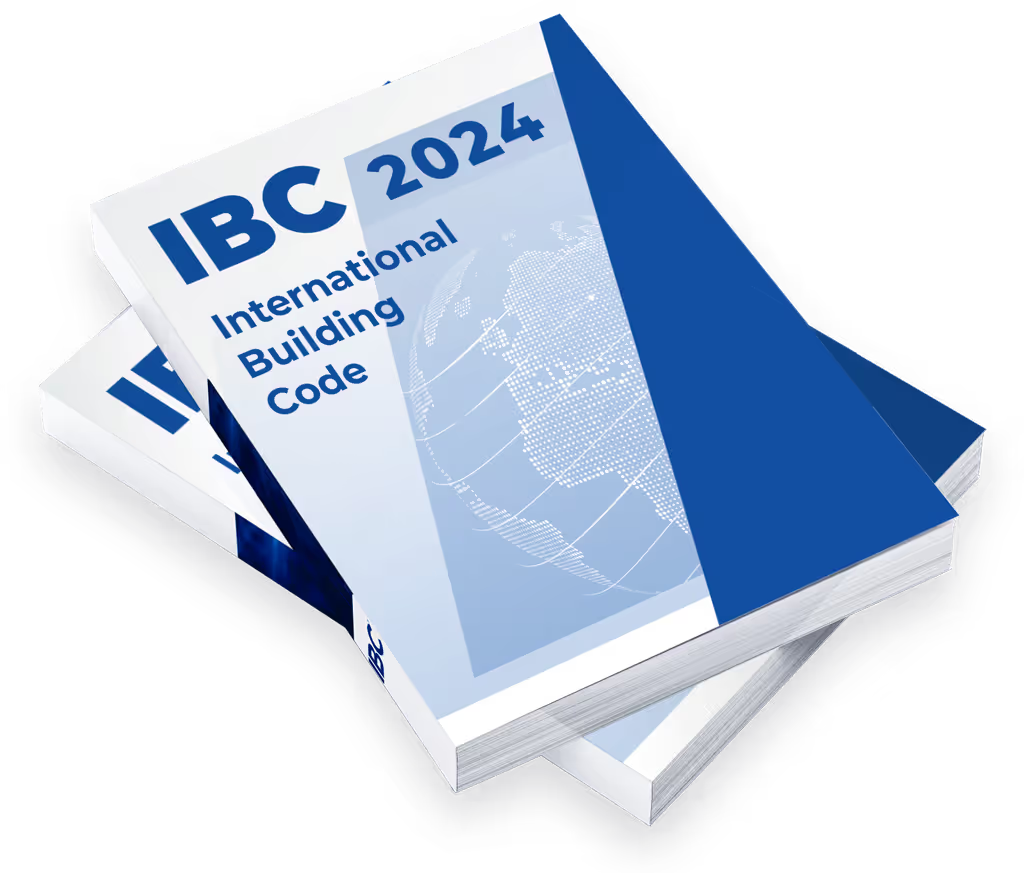

Streamline permit approval
Quick Calculations & Permit Ready Reports
With a customizable report generation tool and easy-to-use calculation modules, StruCalc gets you the answers you need quickly and gives permit reviewers the detail they’re looking for.
Do more in less time
Increase Productivity w/ Templates & Automation
With dozens of built in use cases and the ability to create custom templates for floor joists, roofs, and stud walls, and many other structural members, our intuitive interface and powerful features help you design faster and more accurately. Let StruCalc do the heavy lifting for you!

Tired of Software Bugs and Confusing Inputs?
Get the calculation software you can trust.

Dependable Calculations
For 15 years, our calculation engines have been continuously improved by our structural engineers and proven trustworthy by the thousands of architects and engineers that use them every day.

US Based Engineering Support
We have licensed Professional Engineers and structural design professionals on staff, so when you have a question, just reach out to our US-based engineering team.

Intuitive, Automated Interface
Designed by industry veterans, our 3D visuals, intuitive parameters, and drag and drop feature design enables our users to learn the platform quickly and maximize its functionality.
Pricing & Feature Comparison:
| Top-tier differences: |
StruCalc CORE: $99.97/mo |
Calcs.com: $119/mo |
ENERCALC: $199/mo |
|---|---|---|---|
| Drag & Drop Feature Design | |||
| Multi-Level Load Visualization | |||
| Automated Shearwall Design | |||
| Customizable Design Templates | |||
| Automated Hazard Load Application | |||
| User Themes | |||
| Wood Shearwalls | |||
| Stud Walls | |||
| Bearing Walls | |||
| Retaining Walls | |||
| Hip & Valley Beams | |||
| Collar Ties | |||
| Flitch Beam | |||
| Concrete Beams | |||
| Masonry Beams | |||
| Beam & Joist Spans | |||
| Concrete Columns | |||
| Continuous Footings | |||
| Isolated Footings | |||
| Embedded Posts | |||
| I-Joists | |||
| Glulams | |||
| Solid Sawn | |||
| Steel | |||
| Structural Composite | |||
| 2024 IBC | |||
| 2024 NDS | |||
| 2021 IBC | |||
| 2018 IBC | |||
| 2018 NDS | |||
| 24+ Load Combinations | |||
| Out of Plane Loading | |||
| Multi-span Columns | |||
| Advanced Footing Loads | |||
| Wind, Snow, & Seismic Loads | |||
| Linked Load Tracking | |||
| Beam Analysis | |||
| Wall Analysis | |||
| LRFD | |||
| Live & Dead Loads | |||
| ASD | |||
| Imperial Units | |||
| Masonry Columns | |||
| Concrete Walls | |||
| Masonry Walls | |||
| Wood Hangers | |||
| Curved Glulams |
Packed with Features
Powerful Features & Unbeatable Value
No one else offers as many features as StruCalc. Get more for your money and join thousands of architects and engineers that have chosen StruCalc as their partner for structural calculation software.
Now Offering PDH Courses
Join our community to get great deals on quality PDH courses or get our StruCalc Pro with PDH annual subscription to get 15 PDH hours included with StruCalc Pro.

Purpose-Built Products Tailored To Your Needs
Whether you need simple beam calculations or full vertical and lateral analysis of a custom home, StruCalc has a plan that fits your needs.
StruCalc
Core
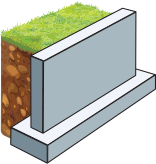
Retaining Walls
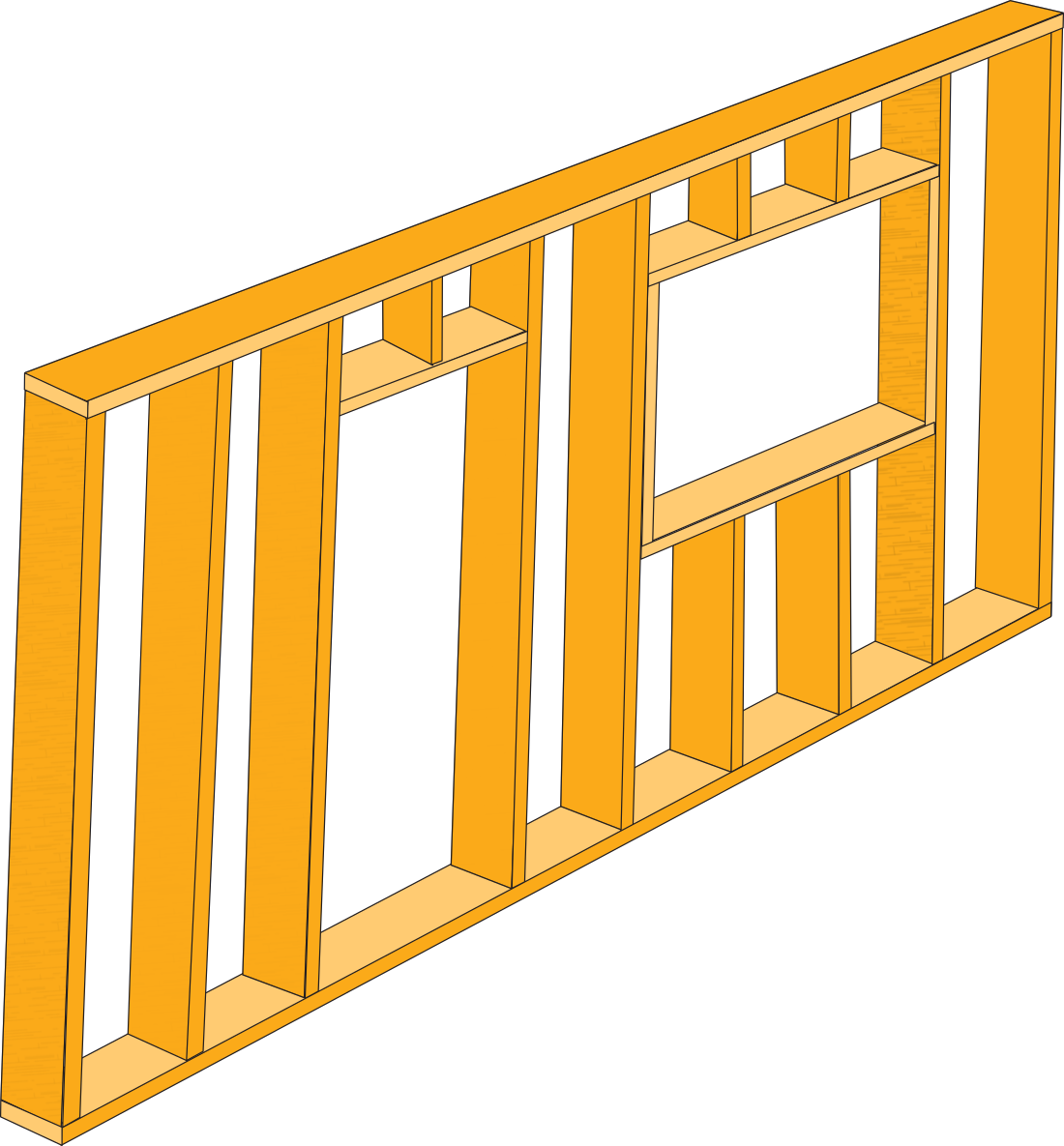
Shearwalls & Stud Walls
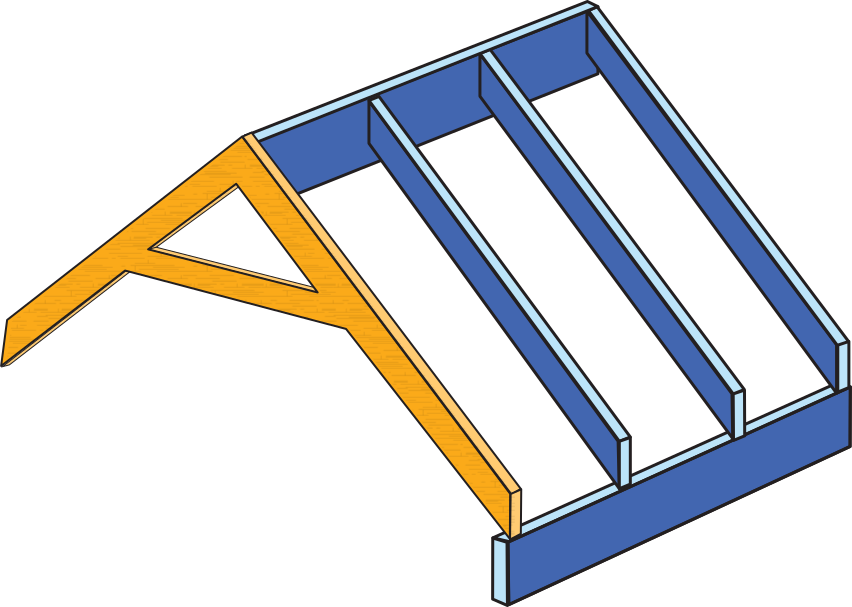
Roof Beams
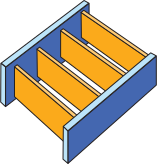
Floor Joists
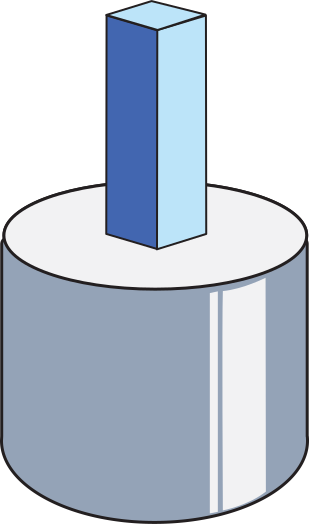
Footings & Much More
StruCalc
Connect
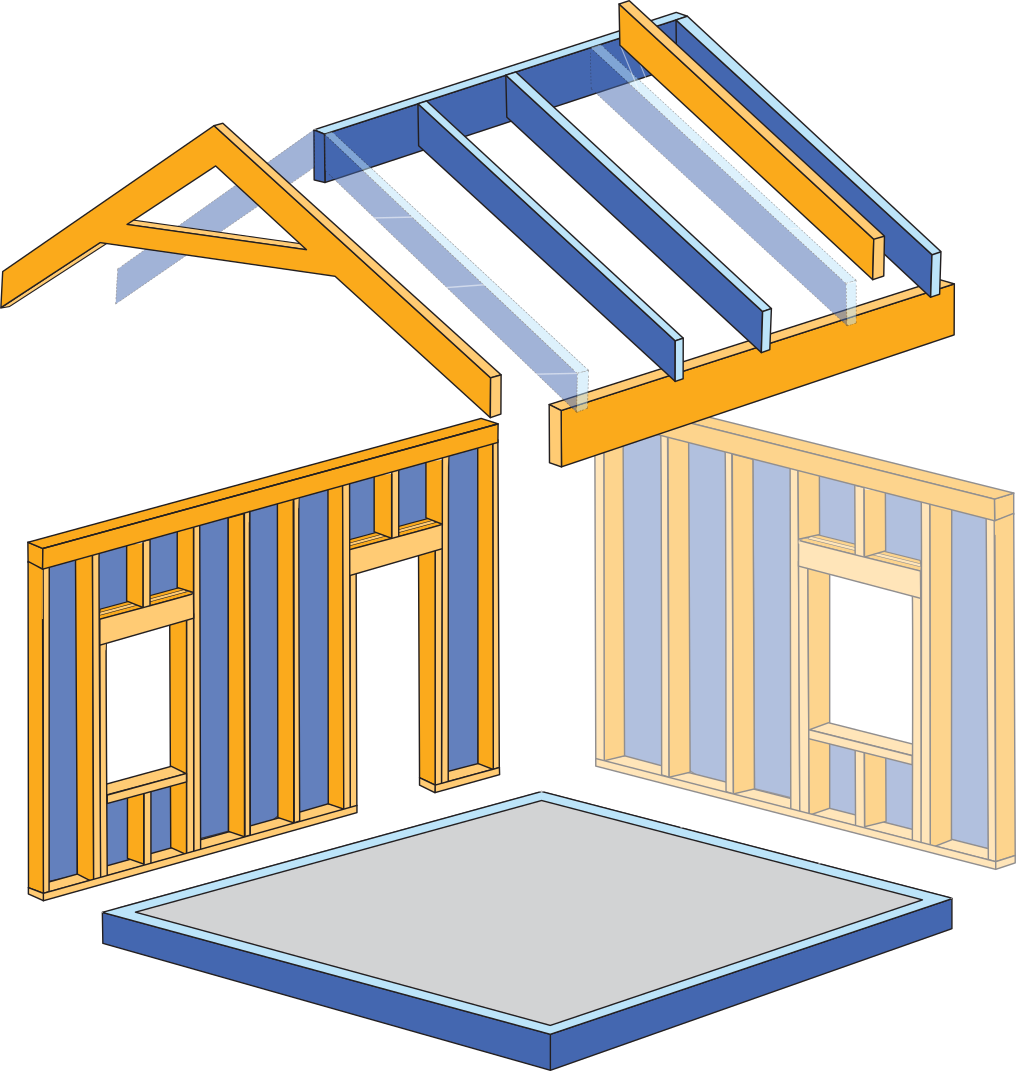
StruCalc
Fusion